


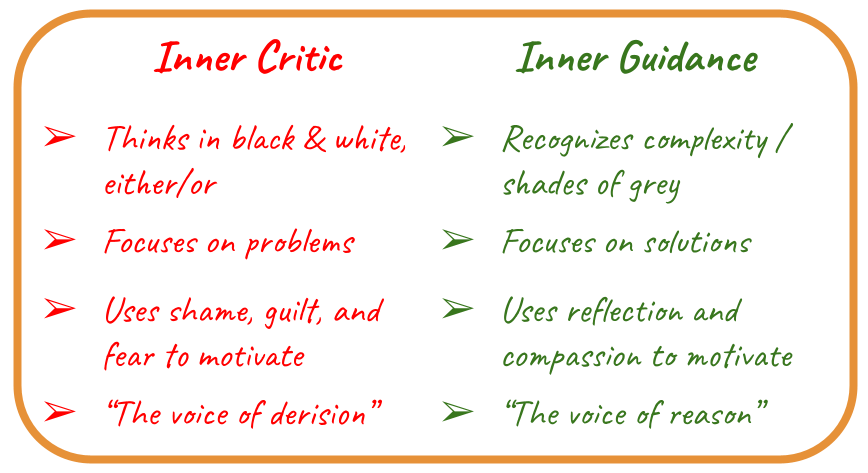
We all have an inner critic. It’s that voice inside our head that tells us we’re not good enough, that we’re making mistakes, or that we should have done better. For some people, that voice is a constant presence that can be hard to silence. But for others, the inner critic can be a helpful tool for self-improvement and personal growth.
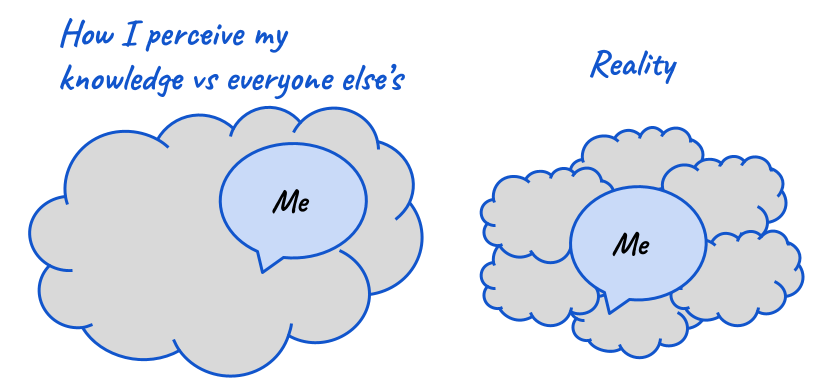
When it comes to mental health, our relationship with our inner critic can be a tricky one, especially for those who struggle with imposter syndrome. Imposter syndrome is a psychological phenomenon where individuals doubt their abilities and accomplishments and fear being exposed as a fraud. It can lead to feelings of inadequacy, and affects people across all demographics, industries, and levels of expertise. In fact, studies suggest that up to 70% of people experience imposter syndrome at some point in their lives. A popular depiction of imposter syndrome illustrates that most of us have a very inflated view of others knowledge and consistently downplay our own.
On the plus side, studies also show that having some degree of imposter syndrome can actually make you more successful!
- The fear of being exposed as a fraud can push you to improve their skills and knowledge, leading to personal and professional growth.
- A sense of humility helps you stay grounded and open to feedback and new ideas.
- If you’ve experienced imposter syndrome, you may be more empathetic and understanding of others who struggle with similar feelings of self-doubt. This can help build stronger relationships and foster a supportive work or social environment.
- Overcoming imposter syndrome can build resilience and the ability to handle challenges and setbacks. By learning to manage negative self-talk, you develop greater mental strength and emotional resilience.
On the other hand, the Dunning-Kruger effect is a cognitive bias that leads people to overestimate their abilities and knowledge. Those who suffer from this effect may have a false sense of confidence in their abilities and may not recognize their own limitations. This can lead to making mistakes or failing to recognize when they need help.
So, how can we manage our inner critic while also navigating imposter syndrome and avoiding the Dunning-Kruger effect?
First, it’s essential to recognize when your inner critic is being unhelpful or overly critical. If you’re experiencing imposter syndrome, remind yourself that you have accomplished something and that you are not alone in feeling this way. Recognize that it is a common experience, and there are many ways to manage it.
Next, challenge your inner critic and the thoughts that come with it. Seek feedback from others and recognize that you have strengths AND there is always room for improvement. Ask yourself if the feedback you’re receiving is based on reality or if it’s just your inner critic getting in the way. If you want to have a bit of fun, give your inner critic and your inner guide names and personalities so that you can name them and more easily separate their stories from your own.


Reframing your thoughts is also an effective strategy. Instead of telling yourself that you’re not good enough or you’re too good, revisit that thought in a different light. For example, instead of saying “I’m not good enough to apply for that job,” or “I’m too good to apply for that job,” think “I have room for improvement, and can gain more skills and experience to help me succeed.”
Lastly, practice self-compassion and recognize that you are not perfect. Everyone makes mistakes and has flaws. Treat yourself with the same kindness and understanding you would offer a friend who was struggling.

What are the names of your inner critic and inner guide? What do they look and sound like?
 Oceanwave Coaching