


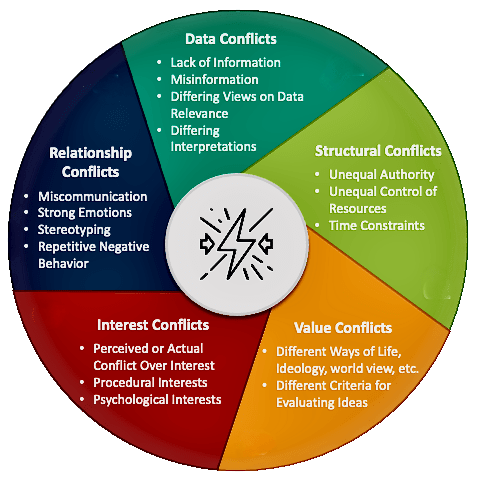
The Circle of Conflict is a powerful framework developed by Christopher Moore that helps individuals and organizations better comprehend and address conflicts. It visualizes the multifaceted nature of conflicts, illustrating the interconnectedness of various elements that contribute to their escalation or resolution. It emphasizes the importance of healthy relationships, values-based interactions, and fostering a culture that values open communication, empathy, and respect. The Circle of Conflict is comprised of five core components, each representing different aspects of a conflict:
- Data: This component represents the information and data involved in a conflict. Miscommunication, misinformation, and differing interpretations of facts can intensify conflicts. Recognizing the importance of accurate and open information exchange is crucial for resolving conflicts.
- Structural Conditions: This component focuses on the contextual factors that contribute to conflicts. It includes aspects such as power dynamics, resource allocation, organizational structure, and external influences. Recognizing and addressing these structural conditions can help prevent conflicts from recurring.
- Values: Values encompass the deeply held beliefs, principles, and cultural norms that shape individuals’ behaviors and actions. Conflicts can arise when values clash or are violated. Appreciating the role of values and promoting a values-based approach can foster understanding and facilitate conflict resolution.
- Interests: Interests reflect the underlying needs, desires, and concerns of parties involved in a conflict. By understanding the interests at play, individuals and organizations can identify common ground and explore mutually beneficial solutions.
- Relationships: Conflicts often arise due to strained or broken relationships between individuals or groups. This component highlights the significance of building and maintaining healthy, trust-based connections to address conflicts effectively.
Using The Circle of Conflict Model
To use the Circle of Conflict, first identify the issue or problem that is causing the conflict and determine which category of the circle it belongs to. To get the most out of the model, use it as a starting point for dialogue and collaboration to resolve the conflict, not a set of hard and fast rules. The categories can be adapted and/or combined to meet the needs of the specific situation, and assessing the intensity and complexity of the conflict can help decide which strategy would be most suitable for resolving it. While each category has some suggestions on how to choose the best strategy, it’s important to note that these strategies may overlap, and the specific approach will depend on the unique circumstances of the conflict.
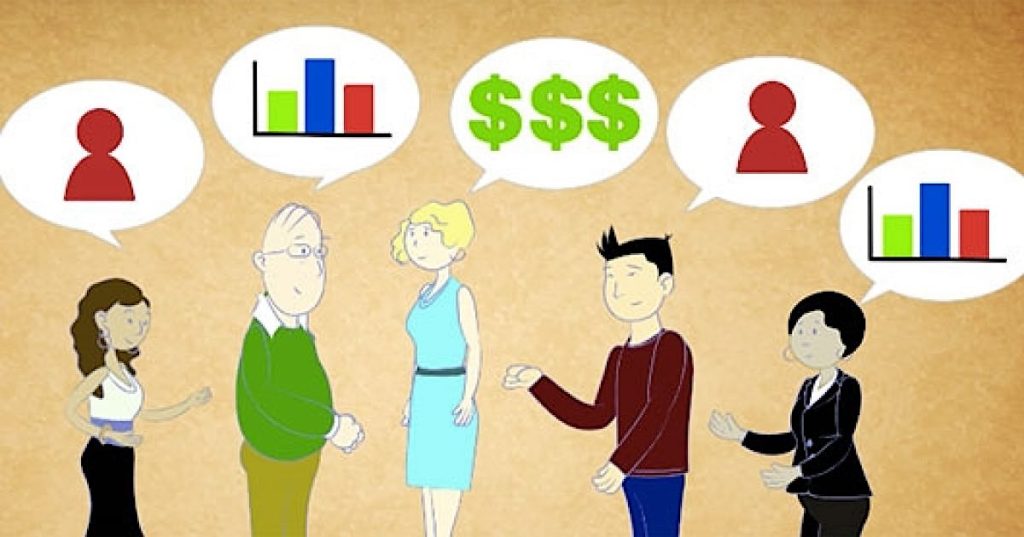
Data
- Name the conflict: Discuss the differences in the use, definitions, and interpretation of the data.
- Improve Communication: Ensure that accurate and relevant information is shared among all parties involved in the conflict. Encourage open dialogue, active listening, and the exchange of facts and data to clarify misunderstandings and address any informational gaps.
- Use the best available data: Encourage the use of the best data that’s available right now and work together to develop better data.
- Seek Objective Evaluation: If there are disagreements regarding data or facts, consider involving a neutral third party or an expert who can provide an unbiased assessment and help resolve disputes based on verifiable information.
Structural Conditions
- Name the conflict: Discuss the structural factors influencing behavior and/or the unspoken systemic of organizational frameworks influencing assumptions about who does and doesn’t have power.
- Review Procedures and Policies: Examine the existing rules, procedures, and organizational structures that may contribute to conflicts. Identify any areas for improvement or modification to create a more conducive environment for resolving conflicts and preventing their recurrence. If the structural factors are within the authority of the group to change, move to action. If they’re external to the group, identify the person(s) who can make change and work with them to do so.
- Promote Clarity and Consistency: Ensure that roles, responsibilities, and decision-making processes are clearly defined and understood by all parties. Consistency in implementing policies and procedures can help minimize misunderstandings and reduce conflicts stemming from ambiguities.
Values
- Name the conflict: Discuss the type of values causing the conflict (e.g. cultural, religious, ideological, political) to eliminate cross-talk.
- Encourage Respectful Dialogue: Explore assumptions or experiences to identify the source of differences in principles or competing commitments. Foster an environment where individuals can express their values and beliefs openly, while also maintaining respect for diverse perspectives. Create opportunities for appreciative inquiry and understanding, emphasizing the importance of empathy and tolerance.
- Find Common Ground: Identify shared values or overarching principles that can serve as a foundation for finding commonality. Seek areas of agreement or compromise that honor the core values of all parties involved.
- Establish norms: Adopt group working agreements like patience, non-judgmental listening, etc that help overcome triggered reactions to values conflicts.
Interests
- Name the conflict: Discuss the competing interests that underlie people’s positions.
- Identify Common Interests: Explore areas of shared interest and seek common ground. By focusing on shared objectives or goals, it becomes easier to find mutually beneficial solutions that address the underlying interests of all parties involved.
- Separate Positions from Interests: Encourage participants to articulate their underlying needs and interests rather than rigidly defending specific positions. This shift allows for more creative problem-solving and the exploration of alternative solutions.
Relationships
- Name the conflict: Discuss the tensions and relationship barriers that occur between specific people or groups.
- Focus on Relationship Building: Invest time and effort into building and maintaining positive relationships among team members. Foster a culture of trust, respect, and collaboration, which can contribute to better conflict resolution outcomes.
- Encourage Mediation or Facilitation: In situations where conflicts significantly impact relationships, consider involving a neutral third party to mediate or facilitate the resolution process. An unbiased mediator can help create a safe space for constructive dialogue and guide the parties toward finding mutually acceptable solutions.
Two additional tips: When working towards a resolution to the identified conflict, it can be helpful to use the TKI model from the previous article to understand each person’s default mode of coping with conflict. This enables the team to tailor the strategies to account for and/or modify those different styles to achieve the best outcomes. You can also use the SCARF model to make sure that people’s social needs are being met.
Example Circle of Conflict Categorizations and Strategies
Let’s look at an example scenario with two coworkers, Alex and Jordan, regarding the allocation of project resources. They’re both vying for a limited budget to support their respective initiatives. In this scenario the potential categories and remediation strategies may be:

- Data: The conflict may arise if there is ambiguity or lack of clarity regarding the available resources, financial constraints, or the criteria for resource allocation. Clarify the available budget, resource constraints, and the criteria for allocation. Ensure both Alex and Jordan have a clear understanding of the financial context.
- Structural Conditions: The conflict could be influenced by the company’s policies or guidelines for allocating resources, such as predefined budget distribution or decision-making procedures. Review the company’s resource allocation procedures and determine if adjustments or modifications can be made to better accommodate both projects. Explore options for optimizing resource utilization.
- Values: The conflict may touch upon the values of fairness, equity, and opportunity. Both Alex and Jordan may have differing perceptions of what constitutes fair distribution and the impact their projects can have. Create a forum for discussion where Alex and Jordan can share their perspectives and values related to fair allocation of resources, and facilitate mutual understanding and discovery of shared values.
- Interests: Alex’s interest may be to secure a larger portion of the budget to implement their project, as they believe it aligns with their career goals and could bring significant value to the company. On the other hand, Jordan’s interest may lie in obtaining a fair share of the budget to support their own project, which they believe is equally important. Encourage open communication between Alex and Jordan to express their project’s importance and the impact it can have on their respective goals. Seek to identify common goals or areas where their projects can be complementary rather than directly competing.
- Relationships: The conflict could strain the relationship between Alex and Jordan if not managed effectively. It may lead to increased competition, decreased collaboration, or the erosion of trust. Emphasize the importance of maintaining a positive working relationship. Encourage Alex and Jordan to find ways to collaborate, support each other’s projects, and seek win-win solutions that benefit both parties.
꧁༺ ༻꧂
As you can see, the Circle of Conflict model prompts organizations to proactively identify and address potential conflict triggers so they can circumvent or mitigate conflicts before they escalate. It creates a shared understanding of the complexities involved and encourages open and constructive dialogue by addressing all dimensions of a conflict. Viewing conflicts through the lens of the Circle of Conflict encourages organizations to adopt a holistic problem-solving approach.
 Oceanwave Coaching
One response to “Constructive Conflict Framework #4: The Circle of Conflict Model”
[…] The Circle of Conflict framework to categorize and diagnose the cause of conflict. […]
LikeLike