


As leaders, we often try to reflect on how things are going and what we’ve learned. This helps us make more informed decisions, try new experiments, and reinforce winning strategies in the future. This level of self-reflection is very useful, and might be as deep as some leaders go. But there’s a whole other level of discovery and learning beyond mere reflection that fewer tap into, reflexivity – reflecting upon the context of the reflector and the system themselves, and thereby resulting in a change to the system.
Reflection and reflexivity, while related, serve distinct purposes and offer unique perspectives on the journey of self-improvement and effective leadership.
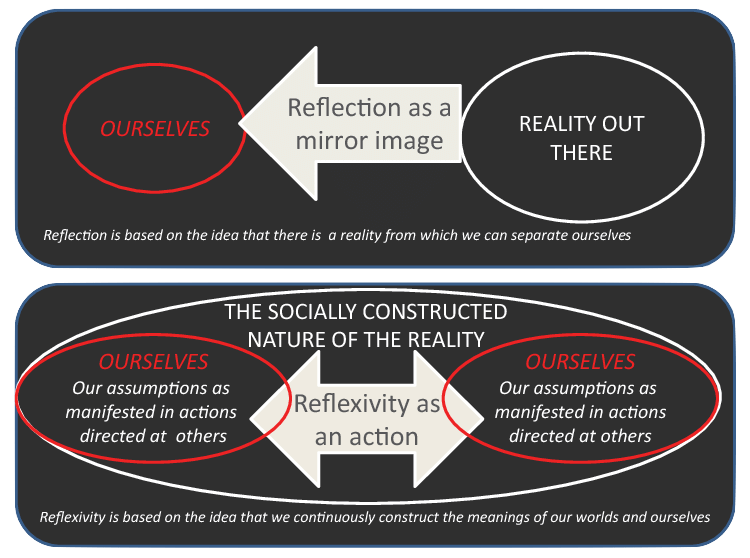
Reflection invites us to peer into the depths of our thoughts, feelings, and actions and have a conversation with our inner selves about what we thought or did in the past. This introspective process not only helps us recognize the impact of our actions but also encourages us to consider our values. It equips us to resolve ethical dilemmas by guiding us to ponder, “What would be most important or valuable for me in this situation?” The benefits of reflection are manifold: it yields self-insight, bolsters confidence, enhances self-awareness, reduces stress, and deepens our understanding of ourselves.

Reflexive thinking, in contrast, is a dynamic, ever-vigilant observer of the patterns and influences that shape our experiences. It’s a self-referential loop of seeing and changing because we see, a constant inquiry into how we interpret the world and how this, in turn, changes the world. It extends beyond individual actions, delving into the realm of influence and consequence, and fostering an awareness of our impact on the world. It helps us dissect the deeper why behind our thoughts and actions.
An Example of Reflections vs Reflexivity
This nuance between the two can be a bit difficult to wrap your head around, so, let’s talk about Casey, the CEO of the tech company CorTeques. CorTeques has a long-standing tradition of quarterly in-person meetings for all department heads, believing that face-to-face interaction fosters better communication and collaboration. These meetings often involve international travel and significant expenses.
Over the past year, several department heads, especially those with young families or other caregiving responsibilities, have quietly expressed to HR their stress about the travel and time away from home. Additionally, the company’s finance department has flagged the rising costs of these meetings.
It is reflection when Casey looks back at the tradition of the quarterly in-person meetings and thinks about their effectiveness, the stress they cause, and the financial costs. This reflection is characterized by thinking about past actions and their outcomes.
It’s reflexivity when Casey examines their personal biases and the broader societal or corporate cultural norms influencing the attachment to these meetings. Are they conducting these meetings because it’s genuinely the best method, or because it’s what is expected in their industry? Is there an inherent belief that face-to-face always equals better communication? Casey is thinking about how their beliefs and the company’s traditions might be shaped by underlying assumptions, biases, or external pressures.
Casey then makes changes based on that reflexive thinking, initiating an open dialogue with department heads and team members to gather more insights about the benefits and drawbacks of these meetings from multiple perspectives. Based on the results, they decide to pilot a hybrid approach. Some meetings will remain in-person, but others will be held virtually. After a trial period, the leadership team will evaluate the new system’s effectiveness in terms of communication, collaboration, cost-saving, and employee satisfaction.

This last step is possible because Casey realizes that they are all part of the system, and that noticing and reflecting on the circumstances of the system cause them to make change to that very system.
꧁༺ ༻꧂
The combination of practicing reflection and reflexive thinking serves as a catalyst for personal and professional growth. Reflective practice enables us to introspect about what we have learned and how we can apply it or learn from it. Reflexive practice prompts us to examine what we’ve learned and consider how the implications of that knowledge can impact the broader context we work in. These modes of thought compel us to pause, slow down, and create the cognitive space necessary to scrutinize our actions and decisions. This slowing down enables us to notice our feelings, emotions, and beliefs without becoming overwhelmed by them, and fosters a sense of balance which results in better decision making.
In the quest for deeper self-awareness and effective leadership, reflective and reflexive thinking are indispensable companions. They invite us to embark on a journey of constant self-improvement, nurturing a holistic understanding of our place in the world. Embrace these twin forces of introspection and awareness, for they provide the keys to unlocking our full potential in the workplace and as compassionate human beings.
 Oceanwave Coaching