


Ever had a moment where you’re left wondering why someone didn’t meet your expectations, or why what seemed obvious to you wasn’t to others? It’s like we’re often speaking different languages without even realizing it. It happens to all of us, both in our work and personal lives.
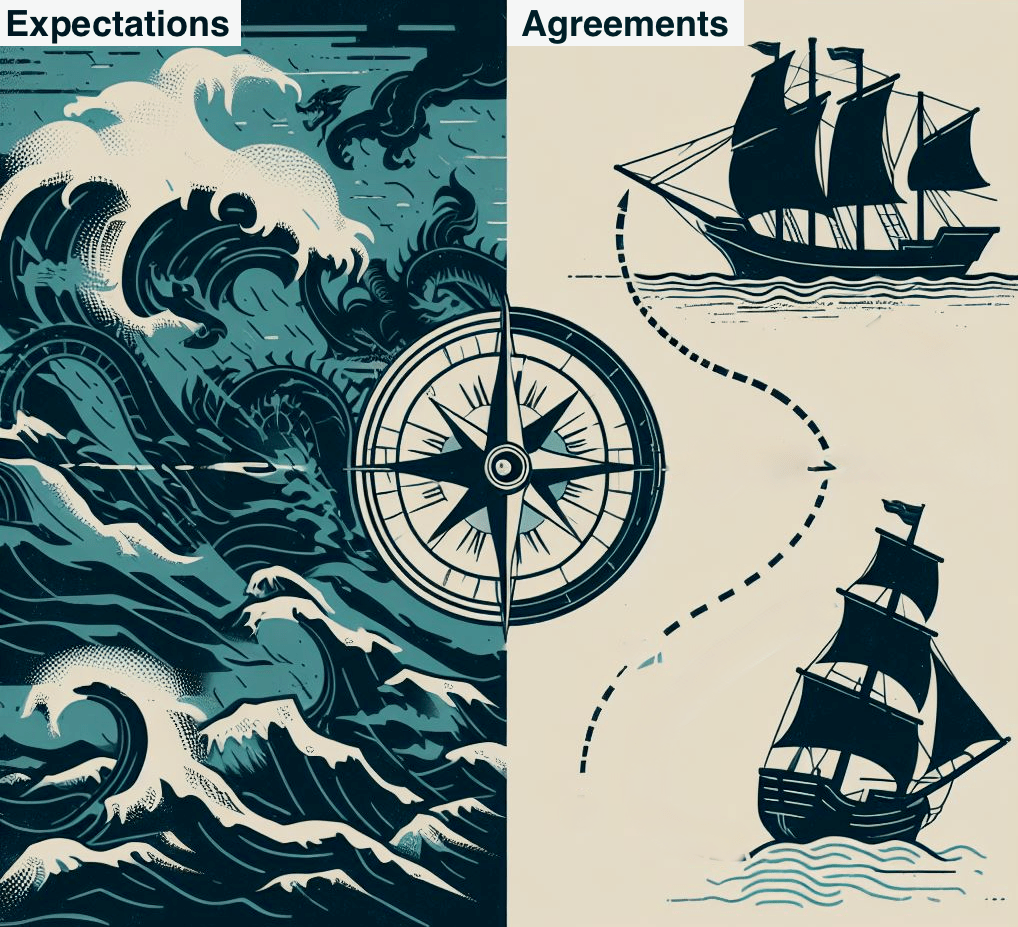
But it doesn’t have to be this way! There’s a simple but powerful tweak in how we approach our expectations that could change everything and eliminate those feelings of disappointment, judgement, and frustration. You and those you interact with can co-create a roadmap to navigate the choppy waters of communication and expectations.
Expectations

An expectation is when you have a strong belief or hope regarding what is likely to happen or what someone should do.
Think of expectations as your internal compass, silently guiding your decisions and interpretations. They spring from a mix of your personal experiences, cultural backdrop, and unique worldview. Like hidden scripts, they play in the background, often unnoticed and unspoken, yet powerfully shaping your interactions.
But here’s the thing about expectations: they’re not universal. What seems clear and obvious to you, based on your internal compass, might be completely off the radar for someone else. This mismatch is where the trouble often begins. This disconnect can lead to frustration, judgment, upset, disappointment, anger, or conflict when expectations are not met.
Take a manager expecting prompt chat responses from the team during work hours. It sounds reasonable, right? But if it’s not clearly communicated and agreed upon, this expectation, shaped by the manager’s personal work ethic, might completely clash with the team members’ understanding of the balance between their focus time and responsiveness to interruptions. The leader might then make some wild leaps on the ladder of inference and assume that the people who didn’t respond in a “timely” fashion are lazy, disrespectful, or not team players.
And it’s not just about others. We do this to ourselves too. We set these internal bars based on what we think we should achieve – climbing the career ladder at a certain pace, hitting life milestones by specific ages. But life isn’t a one-size-fits-all journey. When these self-imposed expectations aren’t met, it can lead to feelings of failure, guilt (where you believe you’ve DONE something bad or wrong), or even shame (where you believe YOU are inherently bad or wrong).
So, expectations aren’t inherently problematic. They help us navigate life’s complexities, but they can trip us up when applied without awareness, especially in our dealings with others. It’s like navigating a maze in the dark. You have a sense of where to go, but without light, it’s easy to stumble.
Agreements

While expectations are like sailing on an open sea with a hidden current, agreements are like navigating with a clear map and a shared destination. They’re not just about saying what we want; they’re about creating a common language and understanding, a kind of blueprint that everyone involved can follow.
Imagine our manager from before. Instead of silently expecting, they call a meeting, laying out their thoughts on team availability. Together, they discuss, debate, and shape an agreement. It’s a process of giving and taking, where clarity replaces assumptions. Now, everyone knows the rules of the game – they’ve all had a hand in creating them. This kind of clarity is what builds a strong, harmonious team environment.
And it’s not just in our professional lives. Even personally, when we shift from vague expectations like ‘getting healthier’ to specific agreements with ourselves – say, exercising for 30 minutes, three times a week – we set ourselves up for success. These self-agreements are like promises we make, not to the world, but to ourselves, clear and measurable.
But here’s the key: agreements aren’t just about deciding what we want. They’re about crafting how we get there, together. It’s answering the who, what, where, and when in a way that leaves little room for doubt. And the beauty of it? The more detailed our agreements, the smoother the journey, for everyone involved.
How to Transform Expectations Into Agreements

Remember how we talked about navigating uncharted seas with unknown currents? It’s one thing to recognize that we’re in these waters, but how do we create the navigation map that guides us to clearer, calmer waters? This is where we transform our hidden expectations into explicit agreements, charting a course that everyone can follow.
- Start with a slice of your life where friction is all too familiar. Make a list – it could be about your work, your relationships, or personal goals. What’s not clicking? Where’s the tension?
- Now, pinpoint the silent expectations behind each of these friction points. Write down what you are you assuming about yourself or others in these scenarios. Recognizing these gaps is like uncovering hidden traps in your path.
- For each expectation, envision an agreement that would bridge the gap. Write down a specific, clear agreement that could replace each unspoken expectation.
- If the agreement is just for you, set it into motion. Monitor how these changes ripple through your life. Are things smoothing out?
- But if others are involved, it’s time to open a dialogue. Bring your proposed agreements to the table and invite their perspectives. This is a collaborative effort – listen, adapt, and mold these agreements until they work for everyone. Remember, the goal is mutual benefit and realistic outcomes.
Reflecting on our earlier scenario, the team’s approach to enhancing chat responsiveness wasn’t a solo decision. Instead, it emerged from a collaborative dialogue, one that carefully balanced the team’s need for uninterrupted focus with the necessity for prompt communication. The agreements they navigated and ultimately crafted together included:
- The team established a roster so that one person was always responsible for monitoring chat and responding within fifteen minutes.
- Everyone would, at minimum, check their messages and respond before leaving for the day, even if only to say that they’d seen the message and would respond first thing tomorrow.
- Everyone would also be reachable by telephone in the case of an emergency, but this method wouldn’t be used for normal communication.
- If a response was needed by a specific deadline, the person sending the message would include that deadline (and how far in advance they needed a response) in the initial request.
꧁༺ ༻꧂
Think of an agreement as a shared journey where every traveler commits to the plan and knows their role and responsibility. But remember, crafting such agreements is an art that requires thoughtful planning and continuous practice.
Regularly revisit and refine your agreements, using any signs of friction as a compass to guide you in identifying and bridging gaps. This process ensures that everyone involved is not only on the same page but is also moving towards a destination that fulfills everyone’s expectations and desires. By doing so, you’re not just more likely to reach your shared goals; you’re also forging stronger bonds of trust and understanding along the way.
Now, ask yourself: which area of your life is calling out for this kind of navigational precision? Where will you begin the journey of transforming expectations into agreements?
 Oceanwave Coaching