


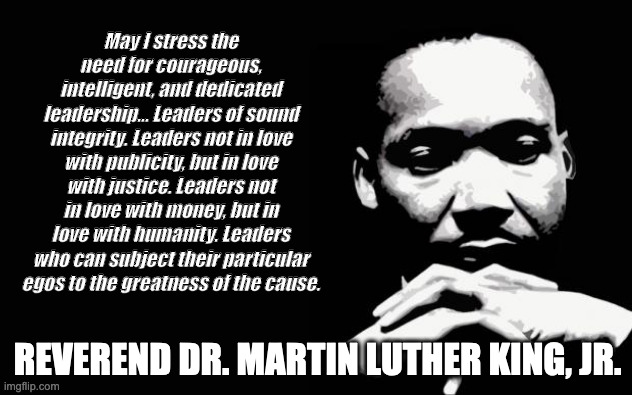
As we reflect on the visionary legacy of Dr. Martin Luther King Jr., it’s clear that his enduring message of courage, justice, and equality has much to teach us about leadership in today’s world. His relentless fight against oppression and advocacy for civil rights didn’t just change laws; they transformed hearts and minds. His unwavering conviction in the face of immense opposition provides a blueprint for how we, as leaders, can advocate and effect change today, especially for underrepresented and oppressed groups.
Dr. King’s powerful influence was rooted in an unshakeable commitment to nonviolence and a fierce determination to achieve racial equality. He didn’t just address the symptoms of inequality but targeted the underlying structures that perpetuated discrimination and segregation. He understood the power of unity and the importance of an inclusive vision that encompassed all marginalized communities. This approach is particularly instructive for us as we navigate an increasingly diverse and complex social landscape.
In the spirit of Dr. King’s legacy, we are all called to take up the mantle of advocacy, especially in championing the rights of underrepresented and oppressed groups. This involves a deep understanding of the challenges these groups face, including systemic discrimination, lack of access to resources, and under-representation in positions of power and influence. We can adopt several strategies to address these challenges and drive meaningful change.

First, fostering an inclusive environment in our organizations or communities is essential. We must go beyond token gestures and implement substantive changes that promote diversity, equity, inclusion, and belonging. We must actively seek out and amplify the voices of those who are often marginalized, ensuring they have a seat at the table and that their perspectives are valued and acted upon.
We must educate ourselves and our teams about the history and current reality of oppression faced by various groups. Developing empathy and informing strategies that effectively address the specific needs and challenges of these communities is crucial. It also involves recognizing and challenging our own biases and privileges, a difficult but necessary step in becoming more inclusive and effective leaders.
Advocating for policy changes, both within organizations and at broader societal levels, is another critical aspect of our roles. We must implement policies that promote equality and protect against discrimination, and actively lobby for such policies in the wider community and political sphere. We can use our influence to advocate for changes that will have a lasting impact on creating a more just and equitable society.
Furthermore, we should focus on building alliances and partnerships with other organizations and groups that are working towards similar goals. Collaborating with others can amplify efforts and lead to more significant and sustainable change. It’s about creating a collective movement, much like the coalition-building that was central to the civil rights movement led by Dr. King.
Lastly, true advocacy requires a commitment to continuous action and learning. This means not being complacent or satisfied with past successes but constantly seeking new ways to support and uplift underrepresented and oppressed groups. We need to be responsive to the evolving challenges these groups face and be willing to adapt strategies accordingly.
꧁༺ ༻꧂
As we seek to honor Dr. King’s legacy, let’s remember that the journey of leadership is one of ongoing courage, advocacy, and commitment to change. By embracing these principles and actively working to support and uplift underrepresented and oppressed groups, we can continue the work started by Dr. King and countless others. The path is undoubtedly challenging, but it’s through persistent and courageous leadership that we can hope to change the world, just as Dr. King did. Our collective leadership can make a profound difference, and in the process, we too can leave behind a legacy of justice, equality, and human dignity.
 Oceanwave Coaching
Leave a comment