
-
How is Coaching Different From Similar Disciplines?
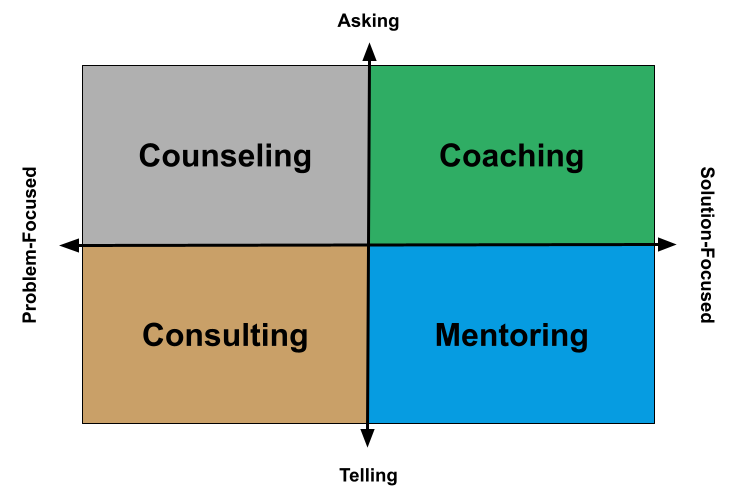
Read more: How is Coaching Different From Similar Disciplines?You need some help getting unstuck so you can reach your professional or business goals… so where do you turn? When it comes to professional development and support, there are four main disciplines to consider: coaching, therapy/counseling, mentoring, and consulting. Each of these approaches varies in focus, whether they’re problem-solving or solution-oriented, and whether they believe the client already has the answers or needs guidance. Understanding the differences between them can help you determine which one is best suited for your current needs and stage of growth. Coaching is a variable-length, creative partnership of equals, focused on the present and…
-
Constructive Conflict Framework #5: The Principled Negotiation / IBR Model
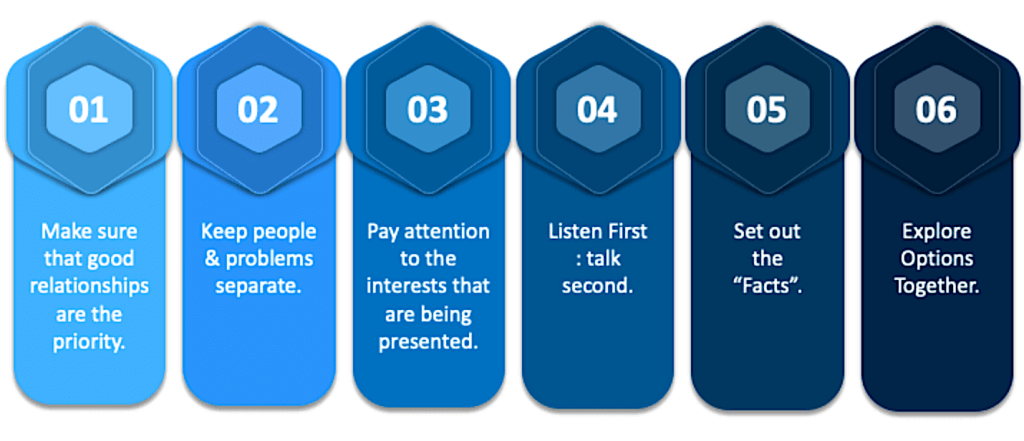
Read more: Constructive Conflict Framework #5: The Principled Negotiation / IBR ModelThe Principled Negotiation framework, described by Roger Fisher and William Ury in their book, “Getting to Yes,” encourages cooperative problem solving by separating the people and their emotions from the challenge. It centers around the belief that, when individuals recognize and leverage common goals and shared values instead of focusing on their differences, they strengthen their relationship and pave the way for effective collaboration. The Interest-Based Relational (IBR) Approach or Interest-Based Bargaining (IBB) are applications of the Principled Negotiation framework. How to Use the IBR Approach The model is broken up into six key steps: Make sure that good relationships…
-
Constructive Conflict Framework #4: The Circle of Conflict Model
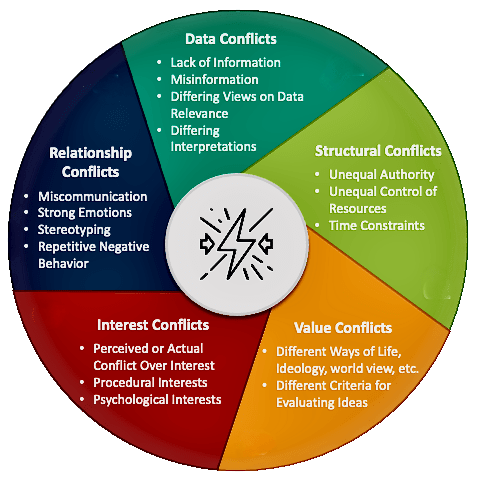
Read more: Constructive Conflict Framework #4: The Circle of Conflict ModelThe Circle of Conflict is a powerful framework developed by Christopher Moore that helps individuals and organizations better comprehend and address conflicts. It visualizes the multifaceted nature of conflicts, illustrating the interconnectedness of various elements that contribute to their escalation or resolution. It emphasizes the importance of healthy relationships, values-based interactions, and fostering a culture that values open communication, empathy, and respect. The Circle of Conflict is comprised of five core components, each representing different aspects of a conflict: Data: This component represents the information and data involved in a conflict. Miscommunication, misinformation, and differing interpretations of facts can intensify…
-

Constructive Conflict Framework #3: The Ladder of Inference Model
Read more: Constructive Conflict Framework #3: The Ladder of Inference ModelThe Ladder of Inference is a concept developed by organizational psychologist Chris Argyris which stipulates that we live in a world of self-generating beliefs that remain largely untested. We adopt those beliefs because they are based on conclusions, which are inferred from what we observe, plus our past experience. The ladder represents the mental process individuals go through when moving from observed data to drawing conclusions, and illustrates how people unconsciously make assumptions based on limited (and often incorrect) information, which then shapes their beliefs, actions, and interactions. The Ladder of Inference consists of several steps or rungs that are…
-

Constructive Conflict Framework #2: The SCARF Model
Read more: Constructive Conflict Framework #2: The SCARF ModelThe second conflict framework we’ll expore is the SCARF model of social threats and rewards. This framework was developed by neuroscientist David Rock and explores the social dimensions of human behavior, providing insights into understanding and managing interpersonal interactions. SCARF stands for Status, Certainty, Autonomy, Relatedness, and Fairness—five core social domains that influence how individuals perceive and respond to social stimuli. For each of these categories, people move towards rewards and away from perceived threats. By considering and managing the social needs within each domain, leaders and managers can create environments that minimize threats and maximize rewards, promoting positive engagement…
-

Constructive Conflict Framework #1: The TKI Model
Read more: Constructive Conflict Framework #1: The TKI ModelThe first model we’ll discuss as part of the nine-part series on coping with complex conflict is the Thomas-Kilmann Conflict Mode Instrument (TKI). The TKI model is a widely used framework for understanding different approaches to handling conflict that was developed by Kenneth W. Thomas and Ralph H. Kilmann based on their research in the field of conflict resolution. The model identifies five conflict-handling modes that individuals may employ in different situations: Competing: This mode reflects a high concern for one’s own needs and goals, often at the expense of others. Individuals who use the competing mode tend to assert…

Tapping your inner strengths to accelerate your growth


